


Hyperactivity and How It Impacts Business Growth

Updated: May 12
When you haven't seen a friend in a while, and they ask how things are going, how often do you respond, "Busy"? Our culture values being busy, as if it were an aspirational state we must all achieve. However, what if your focus on being active went beyond productivity and into the realm of hyperactivity, stalling your business growth?

What is Hyperactivity?
Medline Plus defines hyperactivity as “increased movement, impulsive actions, a shorter attention span, and being easily distracted.” While commonly a symptom of ADHD, high levels of stress can cause hyperactivity in anyone, especially highly driven entrepreneurs. Have you ever started the month focused on completing one very important task, but allowed a lot of smaller, less important tasks to distract you from your goal? When this happens, you are not lazy or unproductive; you are just allowing the desire to get things done to get in the way of getting the right things done.
When you strive to accomplish a dozen minor tasks, you often drain the cognitive energy required to tackle the things that actually will have the most significant impact on your business. For this reason, if you are struggling to complete key activities, one of the first things you have to do is determine which tasks you will delay, delete, or delegate from your to-do list, so that you have the time and energy to get important tasks done.

The Problem: Doing Too Many Things
I recently worked with a small business owner who was stuck in a cycle of starting projects but not finishing them. He knew his business needed to evolve from a transactional model to a subscription-based model to even out his cash flow.
For years, he would start working on the change, only to get distracted, lose momentum, and fail to complete the project he had begun. He had the vision, but he didn't have the time or energy to bring it to life. He was allowing small, urgent tasks to cannibalize the energy needed for the larger, more important objectives. He was too busy managing the day-to-day to build the future.
The Solution: Harnessing SMART Focus
To break the cycle, we moved beyond impulsive initiative launches and began strategic planning and executing with SMART goals.
We used SMART Goals to get:
Specific & Relevant: We defined exactly what the subscription model looked like and why it was essential to accomplish right now.
Measurable and Timebound: We established a clear plan for the work, complete with a consistent check-in process to maintain momentum.
Achievable: We evaluated his current capacity. Which included saying "no" to new projects—including enticing opportunities for radio and TV marketing—that would have distracted him from the primary goal.
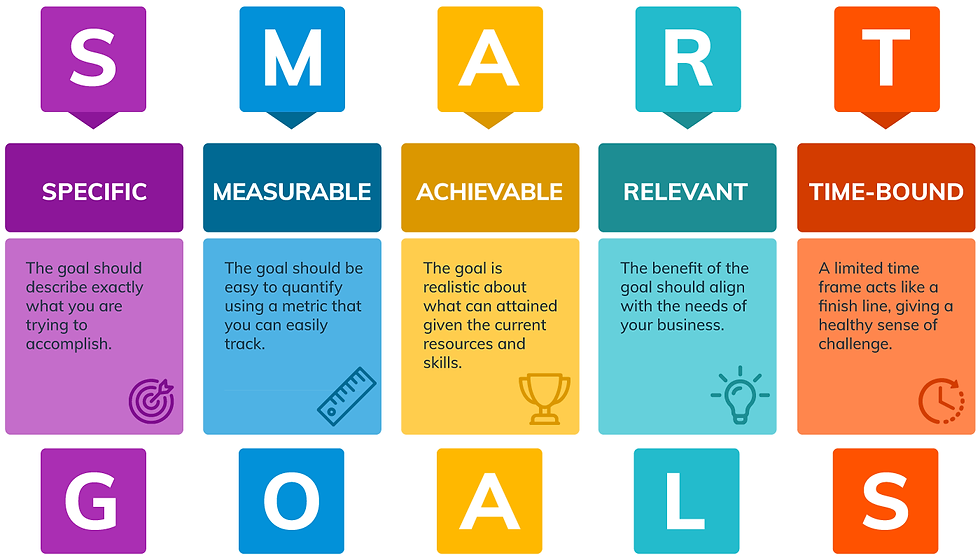
SMART Goals Drive Focus and Persistence
Success rarely follows a straight line. While we planned for six months, the actual launch took nine. We encountered a few hurdles:
Alignment Delays: It took longer than forecasted to complete the website
Life Happens: An unexpected personal event took priority over this project for a month or so.
Strategic Pauses: We intentionally delayed certain milestones to account for the holiday season, ensuring we didn't burn out.
Because we had a plan in place, these weren't failures; they were adjustments. We stayed the course, resisted the urge to jump into other projects, and kept the focus on the subscription launch.
The Outcome: Improved Client Acquisition
We recently launched the new marketing plan. Interestingly, the mere act of discussing the goals so thoroughly led to a boost in subscription sales even before the official launch. Within the first week of the new plan going live, the business saw a significant lift in volume.
The takeaway for every business owner is this:
Prioritization is Power: SMART goals aren't just about checkboxes; they are about deciding what not to do.
The Power of "No": To get the most important things done, you must decline opportunities that compete for your limited time and energy.
Trust the Process: Sticking to a plan—even when it takes longer than expected—is the most effective way to learn, grow, and ultimately achieve sustainable success.
If you want to reach your goals faster, stop trying to do everything. Start doing the right things. Executive coaching helps you build the skills, habits, and mindset to complete important tasks in your business. Reach out if you would like to discuss how we can help you achieve your goals.
Resources
Your Path Coaching and Consulting
Empowering individuals and organizations to reach their full potential through personalized coaching and strategic consulting.
Our Services
Take the Next Step
Ready to reach your goals? Schedule a free consultation today to discuss how we can help you create positive change.
Connect With Us
Phone: 804-547-8313
Podcast: https://open.spotify.com/show/7fesa881MeDHXWAqssJGug?si=d1e2c0c9b8004ec7
© 2026 Your Path Coaching and Consulting. All Rights Reserved.
Disclaimer:


Comments